
Functional Brain Age Assessment for Your Practice
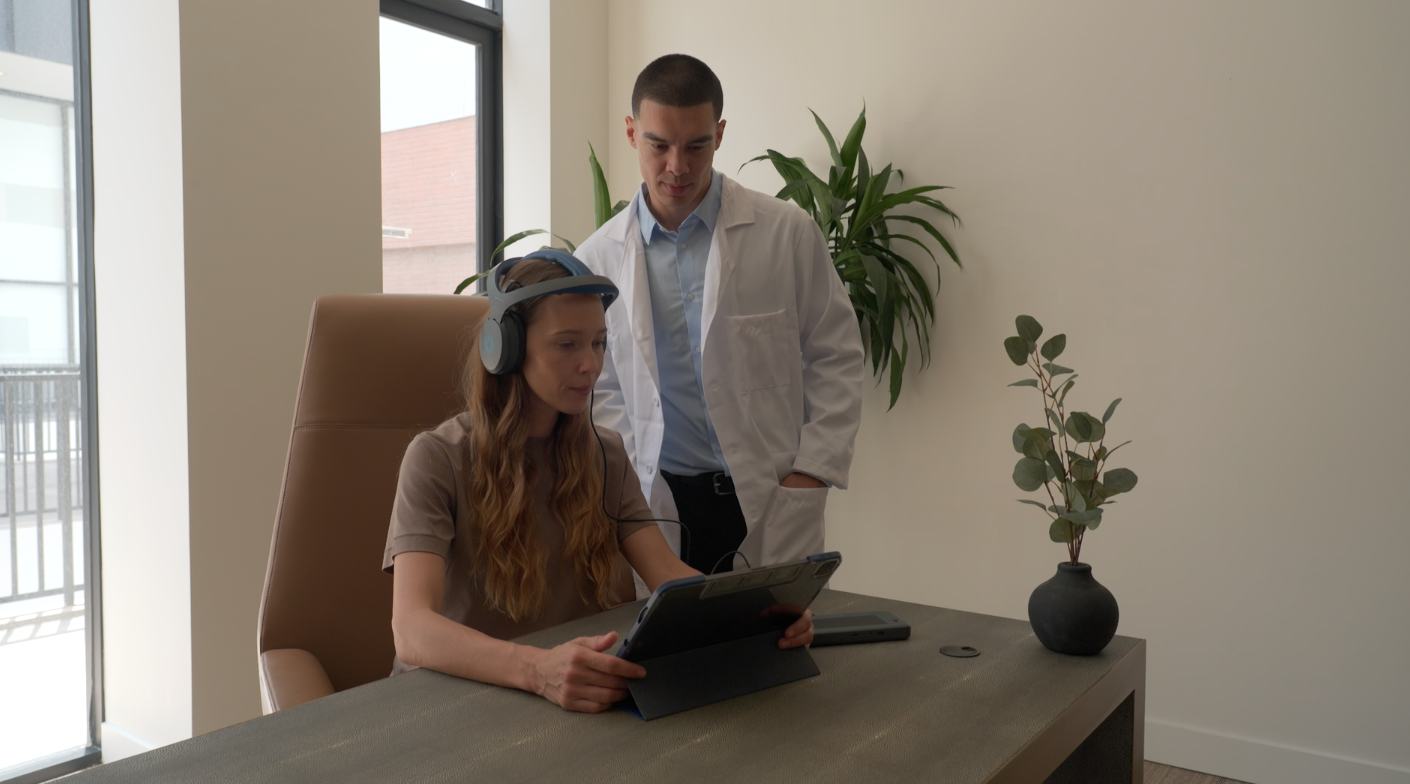
BrainYears™ tells your clients the age their brain is working at, from a 20-minute assessment in your practice, and connects it to an intervention that can improve it.
The BrainYears™ Research
Gold-standard MRI accuracy, from a headset rather than a scanner. BrainYears™ was developed in collaboration with the Buck Institute for Research on Aging.
r = 0.92
4.4 years
5.18 years
In a real-world study pre-published on bioRxiv, participants who trained with Sens.ai reversed an average of 5.18 BrainYears in 56 days. A 28-person intervention group against a 22-person minimal-exposure comparison group, co-authored by Sens.ai and Buck Institute researchers. Non-randomized and self-selected. Those who didn't adhere to the protocol showed no meaningful change.
Measure, Improve, Measure Again
Functional brain age, every assessment*
Years older or younger than chronological age.
*Sample data for illustration. Individual results will vary.
The BrainYears™ Report
Your clients already know their biological age. This is how they learn their brain's: a sample report for Dan, 50, ready within minutes of a 20-minute assessment.
Functional Brain Age
BrainYears™ powered by Sens.ai is a clock for the brain's function: it tells you the age the brain is working at, not the age on a calendar. An AI model reads 643 biomarkers of brain function and performance to produce it.
48.2 years
Four Cognitive Domains
One number tells Dan where he stands. The four domains tell you why. Each is a percentile against people his age, with the middle third shaded. Dan's brain is working younger than he is, yet two domains sit below the median. That pattern usually points to something affecting performance now, such as sleep or stress, rather than how his brain is aging.
Information Processing
Attention
Self-Regulation
Performance Output
Biomarkers Behind Each Domain
Each domain rests on four biomarkers measured in real units, 16 in all, plus 4 indicators. This is where the report gets specific. Dan filters out distraction better than 94% of people his age, yet his focus fades as the assessment goes on. That is the kind of pattern a plan can work on.
Distraction Cost Index
94th
Response Consistency
14th
Lapse Rate
41th
Attention Fatigue Index
9th
Personalized Recommendations
The report turns those patterns into a plan across five areas, built from the results and the client's own questionnaire answers. Dan's plan starts from one finding:
Your assessment shows sustained stress may be contributing to how your brain maintains focus over time.
Aerobic Exercise
Exercise affects both stress regulation and attentional resilience, which makes it useful when stress is shaping how cognitive performance holds up.
Sleep
Sleep replenishes the cognitive resources that sustained stress depletes, which makes it a useful counterweight when stress is shaping how cognitive performance holds up.
Neuromodulation: Brain Training and Stimulation
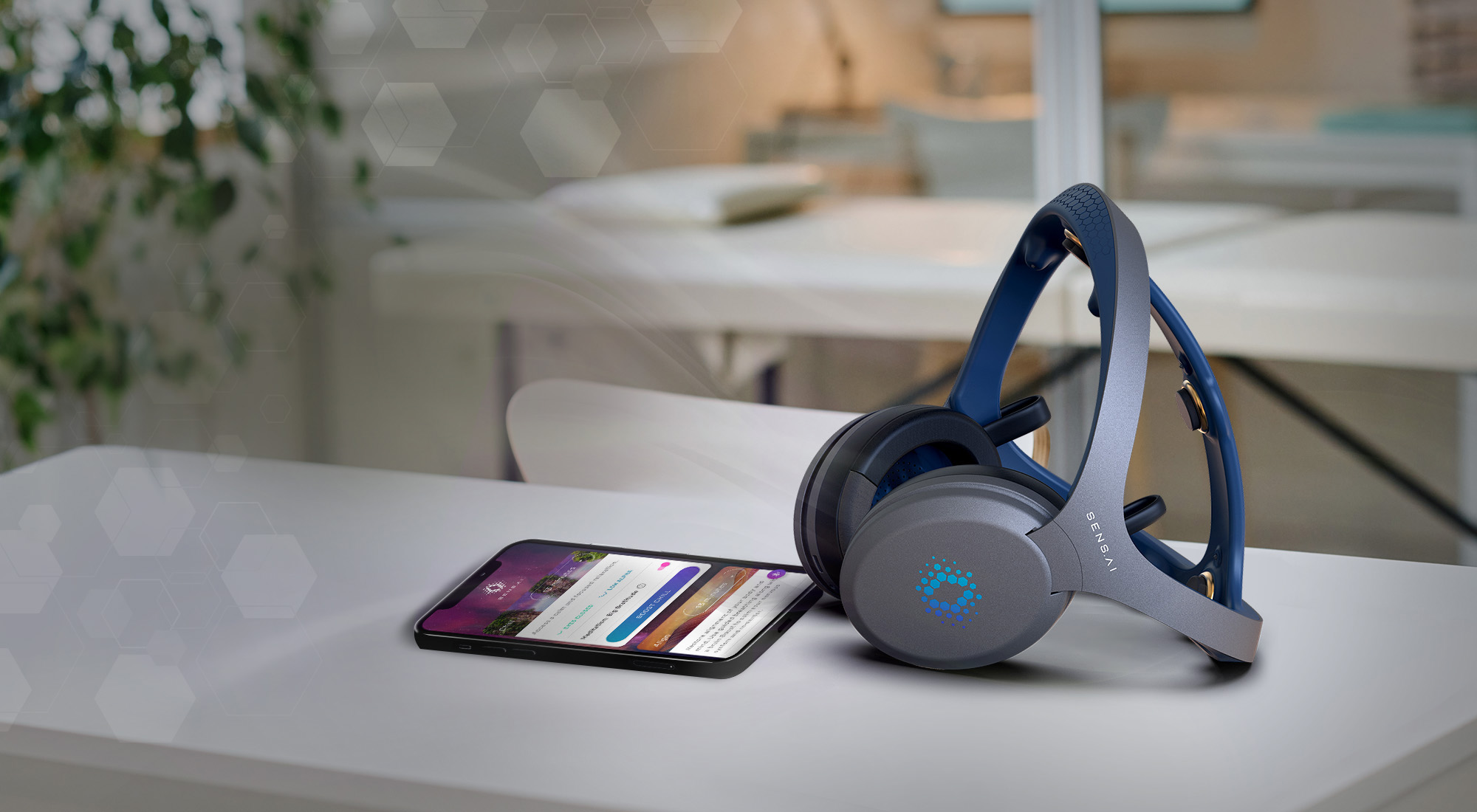
The Sens.ai system combines three neuromodulation modalities in one headset: EEG neurofeedback, heart rate variability (HRV) biofeedback, and personalized transcranial photobiomodulation (tPBM) with binaural beats.
Meditation and Stress Reduction
When stress is impacting cognition, the cognitive load isn't just the original task; it's the task plus the background work of managing arousal.
Nutrition and Supplementation
Cell membranes, neurotransmitter synthesis and energy production form the neural infrastructure that supports processing efficiency and memory, and each depends on specific nutritional inputs.
From Report to Intervention
The recommendations become the intervention. In the interpretation appointment, you and Dan agree on what he will work on, and the report names the Mission to start with: Calm You, starting with Calm Heart Training, which he follows at home. Two to three months later, the next assessment shows what changed.
Get a Sample BrainYears™ Report
Enter your details to receive a BrainYears™ sample report, and next steps to bring BrainYears™ to your practice.
Disclaimer
BrainYears™ is a wellness tool that provides insight into your cognitive performance and functional brain age. It is not a medical evaluation, diagnosis, or treatment recommendation, and does not indicate the presence or absence of any disease or medical condition.